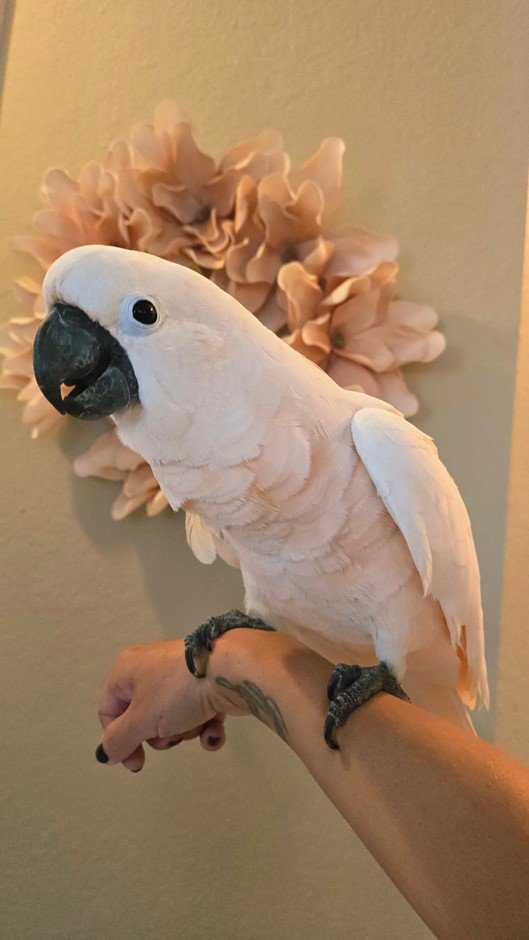
Moluccan Cockatoo for sale
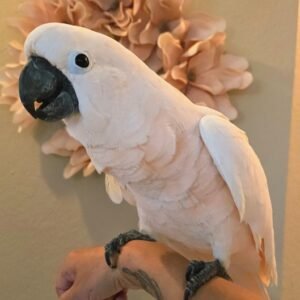
Incredibly sweet, hand-fed, tame and fully trained Moluccan Cockatoo for Sale ready now for his forever homes. He is weaned on a healthy diet of organic pellets and vegetables. All our babies are very well socialized, tame and sweet.
Training tips for beginners
They bond intensely and can become obsessive, so daily, gentle training with positive reinforcement (treats, praise) is essential from day one.
Focus on step‑up, step‑down, targeting, recall, and quiet/settle cues in very short sessions (5–10 minutes, several times per day), avoiding any punishment, which often leads to aggression and screaming.
Care requirements and daily needs
Need multiple hours of direct interaction and out‑of‑cage time every day, plus a large, enriched environment with heavy‑duty chew toys, foraging toys, varied perches, and frequent bathing/misting.buffalobirdnerd+2
Require meticulous hygiene: change cage papers daily or every other day, clean bowls and visible waste every day, and provide UV light exposure or safe outdoor time for bone and feather health.
Legal requirements to own
The species is listed on CITES Appendix I, so international trade in wild‑caught birds is illegal; only captive‑bred birds with correct documentation should be bought or sold.
Local rules vary by country/state; many regions require proof of legal origin and may regulate breeding, sale, or transport, so buyers must check national wildlife and import laws before purchase.
Lifespan and health issues
Large cockatoos like Moluccans commonly live several decades in captivity when well cared for, making them essentially lifetime commitments.
Common problems include obesity on seed‑heavy diets, feather‑destructive behavior from stress or boredom, respiratory issues from dust if ventilation is poor, and beak/foot problems without proper perches and grooming.
Diet and feeding schedule
Best base diet is a high‑quality pelleted parrot food, with a large portion of daily intake from vegetables and some fruits; nuts and seeds should be limited to training treats.google+3
Offer fresh food in the morning and evening, remove spoiled produce after a few hours, keep fresh water available at all times, and provide calcium sources such as cuttlebone or approved supplements as advised by an avian vet.buffalobirdnerd+2
Cage size and enclosure setup
They are very large, active birds; the ideal is a walk‑in aviary or at least around 4–4.5 m (about 14–15 ft) long for true flight and climbing, with the biggest cage/aviary space you can manage.petplace+2
As an absolute minimum indoor cage, sources recommend roughly 30–36 in deep, 48 in wide, and 6 ft high, built from very strong metal with escape‑proof locks, plus a separate play‑gym or T‑stand for time outside the cage every day.
10 FAQ about buying a Moluccan Cockatoo
Are Moluccan Cockatoos good for beginners?
No. They are considered one of the most demanding parrot species and are recommended only for experienced, at‑home owners.How loud are they?
Extremely loud; their calls can be heard over long distances and are often unsuitable for apartments or close neighbors.How much attention do they need daily?
They want near‑constant contact and should have multiple hours per day of direct interaction and out‑of‑cage time.What should I look for in a seller?
Captive‑bred, legally documented birds, clean facilities, willingness to answer questions, and evidence of vet care and socialization.What age is best to buy?
Fully weaned, well‑socialized juveniles from reputable breeders or rescues are preferred; unweaned babies are not suitable for novices.Can they live with other birds?
They can be social, but breeding‑age Moluccans are known for severe mate aggression, so any pairing must be managed very carefully.What size cage should I buy?
As large and sturdy as your home and budget allow, with at least large‑cockatoo dimensions and extra play areas outside the cage.What do they eat every day?
Primarily pellets plus varied vegetables and fruits, with limited nuts and seeds, and constant access to clean water.google+2How often do they need grooming and baths?
Offer bathing or misting daily or every few days, with regular nail and beak care performed by an experienced handler or avian vet.Why are so many Moluccans in rescues?
Many owners underestimate their noise, dust, destructive power, and emotional needs, leading to behavioral problems and eventual surrender.
Thomas –
Very friendly staff with an amazingly large collection of birds, including some rare ones. They will let you just browse, or help you make a selection. There’s plenty to see here. They also have a wide selection to help you outfit a habitat for your new friend. They also stock plenty of food choices and will even mix you a custom blend for your bird’s needs or preferences.