African Grey Parrot for Sale
The African Grey Parrot is one of the most intelligent and sought-after companion birds in the world. Known for their exceptional talking ability, problem-solving skills, and strong emotional bonds with their owners, African Greys make remarkable lifelong companions.
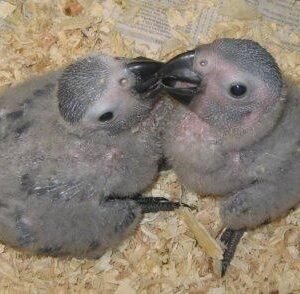
We offer healthy, well-socialized African Grey parrots that are hand-raised and accustomed to human interaction. These birds are known for their calm temperament, sharp intelligence, and ability to mimic words and sounds clearly. Both young birds and adults may be available depending on current stock.
All parrots are properly cared for, fed a balanced diet, and raised in a clean environment to ensure excellent health and strong social behavior. Documentation and health records are available upon request.
African Greys can live 40–60 years with proper care, making them a long-term companion for dedicated owners. They thrive in homes that provide daily interaction, mental stimulation, and a structured routine.
If you are looking for a smart, affectionate, and engaging companion bird, the African Grey Parrot is an outstanding choice.
African Grey parrot Lifespan
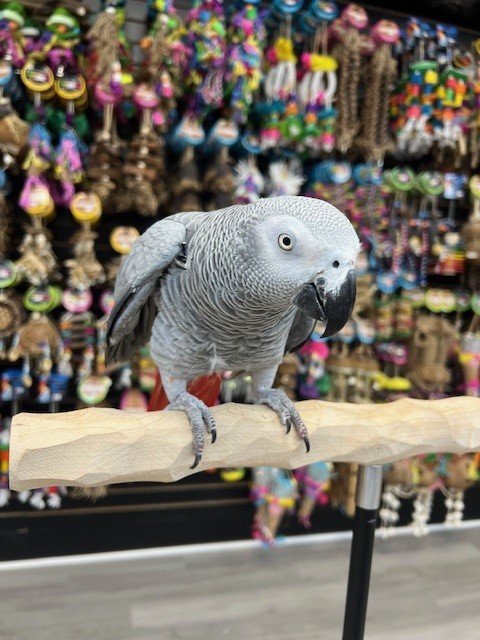
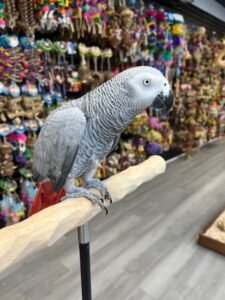
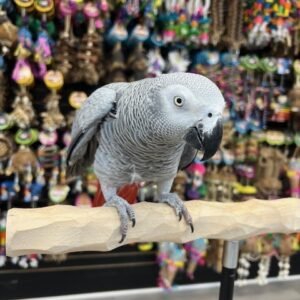
Grey parrots feature distinctive scalloped grey plumage, a bright red tail, white face mask, and yellow eyes in adults. They weigh 418–526 grams and can live 40–60 years in captivity with excellent care, though wild lifespans average around 23 years.
Common health issues include feather plucking from boredom or stress, calcium deficiency leading to weak bones or seizures, obesity from poor diet, and respiratory problems if exposed to fumes or poor air quality. Regular avian vet checkups with fecal tests and bloodwork are essential, plus weekly weighing to monitor health.
African Grey parrot Daily Care Routine
Provide 10–12 hours of dark, quiet sleep nightly, 2–3 hours of supervised out-of-cage time for interaction and exercise, and daily foraging/puzzle toys to combat boredom. Mist or offer baths several times weekly, spot-clean the cage daily, and fully disinfect weekly with bird-safe products.
Keep them away from kitchen fumes, non-stick pans, toxins, and drafts; maintain stable room temperatures and moderate humidity.
Diet and Feeding African Grey parrot
Base the diet on 75% high-quality pellets, 20–25% fresh vegetables and leafy greens (e.g., kale, carrots, peppers), and under 5% fruits or treats like nuts. Fresh water daily; avoid seeds as a staple, avocado, chocolate, caffeine, and salty foods.
Feed in the morning with pellets and veggies, offer training treats midday, and remove perishables by evening.
African Grey parrot Cage and Enrichment
Use a large cage (minimum 36x30x48 inches high with horizontal bars for climbing) in a social family area but not the kitchen. Include varied perches, foraging toys, and rotate them weekly; provide a separate play stand for out-of-cage time.
African Grey parrot Training Basics
Leverage their intelligence with positive reinforcement (treats for “step up,” targeting, or tricks); short 10-minute sessions daily build vocabulary and bonding. They excel at mimicking speech but need mental stimulation to avoid neurotic behaviors.
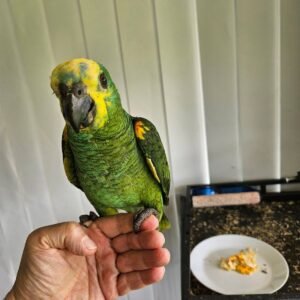
Comparison to White-Fronted Amazon
| Aspect | African Grey Parrot | White-Fronted Amazon |
|---|---|---|
| Size/Weight | Medium (418–526g) | Smaller Amazon (~280g) |
| Noise Level | Moderate screeches, excellent talker | Louder, less talking focus |
| Intelligence | Exceptional (counts, shapes, colors) | High but more willful/chewy |
| Lifespan | 40–60 years | 40–50+ years |
| Social Needs | Very high; prone to stress/plucking | High; needs chew/out-time |
| Diet Base | 75% pellets, veggies | 60–70% pellets, veggies |
| Cage Minimum | 36x30x48″ | 24x24x36″ (but larger ideal) |
| Beginner Fit | Experienced owners only | Committed beginners possible |
Buyer’s Tips
✔ Ask for health documentation and vaccination records.
✔ Confirm whether the bird is hand-raised and socialized.
✔ Beware of unusually low prices — they can indicate poor care or illegal trade.
Reviews
There are no reviews yet.