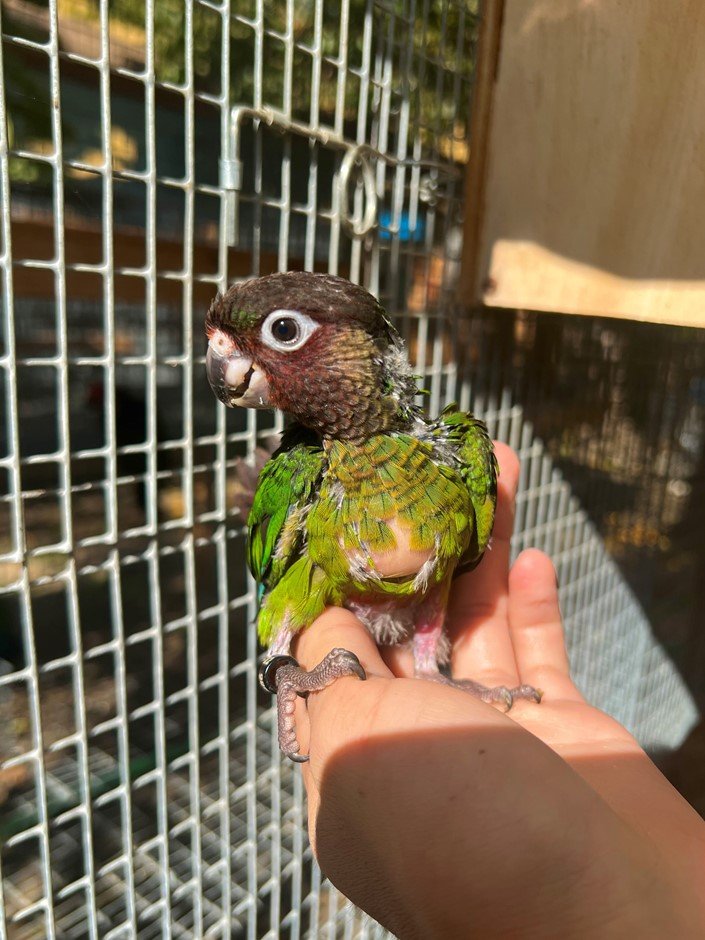
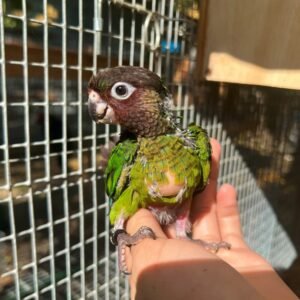
Roseifrons Conure Baby (Rose-fronted Parakeet)
Roseifrons Conures, commonly known as Rose-fronted Parakeets, are playful, intelligent, and affectionate parrots that make wonderful companions when properly raised. If you’re considering bringing home a Roseifrons Conure baby, this complete guide covers training, care, legal requirements, diet, cage setup, lifespan, and common health concerns.
Overview of Roseifrons Conure Babies
- Scientific name: Psittacara roseifrons
- Size: 10–12 inches
- Weight: 90–120 grams
- Lifespan: 25–35 years
- Noise level: Moderate to loud
- Personality: Social, active, curious
These birds thrive on interaction and mental stimulation. Early training and consistent care shape them into confident adult companions.
Roseifrons Conure Baby Training Tips for Beginners
Training should begin as soon as your baby is fully weaned and settled into its new home.
1. Build Trust First
- Spend time near the cage talking softly.
- Offer treats from your hand.
- Move slowly and avoid sudden gestures.
Trust reduces fear-based biting.
2. Teach Basic Commands
Start with:
- “Step up”
- “Step down”
- Recall training (coming when called)
Keep sessions short (5–10 minutes) and positive.
3. Use Positive Reinforcement
Reward with:
- Small fruit pieces
- Pellets
- Verbal praise
Avoid punishment — conures can become fearful or defensive if handled harshly.
4. Encourage Socialization
Introduce your bird to:
- Different family members
- Safe new environments
- Normal household sounds
Early socialization prevents excessive fear and territorial behavior.
Roseifrons Conure Baby Care Requirements & Daily Needs
Daily Interaction
Roseifrons Conures need 2–3 hours of out-of-cage time daily for exercise and bonding.
Mental Stimulation
Provide:
- Foraging toys
- Shreddable materials
- Climbing structures
- Puzzle toys
Rotate toys weekly to prevent boredom.
Sleep
They require 10–12 hours of quiet sleep each night.
Hygiene
- Fresh water daily
- Remove fresh food after 3–4 hours
- Clean cage tray daily
- Full cage cleaning weekly
Consistent hygiene helps prevent infections.
Legal Requirements to Own a Roseifrons Conure Baby
Ownership laws vary by location.
United States
Generally legal in most states. However:
- Some cities restrict exotic birds.
- Health certificates may be required for interstate transport.
United Kingdom & Europe
- May require proof of captive breeding.
- CITES documentation may apply.
International Buyers
Check import/export laws before purchasing. Always buy from reputable breeders with proper documentation.
Average Lifespan & Common Health Issues
Lifespan
With proper care, Roseifrons Conures live 25–35 years.
Common Health Concerns
- Feather plucking (stress-related)
- Nutritional deficiencies
- Obesity
- Respiratory infections
- Psittacosis
- Beak and feather disease (rare but serious)
Annual avian veterinary checkups are strongly recommended.
Recommended Diet & Feeding Schedule
A balanced diet supports growth and longevity.
Ideal Diet Breakdown
- 60–70% high-quality pellets
- 20–30% fresh vegetables
- 5–10% fruit
- Seeds only as occasional treats
Best Vegetables
- Carrots
- Kale
- Bell peppers
- Broccoli
- Sweet potatoes
Fruits (In Moderation)
- Apples (no seeds)
- Berries
- Mango
- Papaya
Feeding Schedule Example
Morning: Fresh vegetables + pellets
Evening: Pellets + small training treat
Remove uneaten fresh food after a few hours.
Foods to Avoid
- Avocado
- Chocolate
- Caffeine
- Alcohol
- Onions and garlic
- Salty and sugary foods
Best Cage Size & Enclosure Setup
Even though they are medium-sized conures, space is important.
Minimum Cage Size
At least 24″ x 24″ x 30″
Larger is always better.
Bar Spacing
Between 1/2″ and 5/8″
Essential Cage Accessories
- Natural wood perches (varied sizes)
- Rope perch
- Foraging toys
- Shreddable toys
- Stainless steel bowls
- Climbing ladders or swings
Place the cage in a social area of your home but away from drafts and kitchen fumes.
10 FAQs About Buying a Roseifrons Conure Baby
1. How much does a Roseifrons Conure baby cost?
Prices typically range from $400–$1,200 depending on breeder and location.
2. Are they good for beginners?
Yes, with proper commitment to daily interaction and training.
3. Are Roseifrons Conures loud?
They can be moderately loud, especially when excited.
4. Do they talk?
Some can mimic words, but they are better known for playful vocalizations.
5. Are they affectionate?
Yes, many form strong bonds with their owners.
6. Do they bite?
All parrots can bite, especially if frightened or poorly socialized.
7. Should I buy a hand-fed baby?
Yes. Hand-fed babies are usually more social and easier to train.
8. Can they live with other birds?
Sometimes, but supervision is required.
9. What is the biggest mistake new owners make?
Not providing enough mental stimulation.
10. Are they good apartment birds?
They can be, but noise should be considered.
Final Thoughts
A Roseifrons Conure baby can be a loving, energetic companion for decades. With proper training, socialization, nutrition, and veterinary care, they thrive in interactive homes.
If you’d like, I can also provide:
- SEO product tags
- A buyer’s checklist
- A breeder screening guide
- A printable care sheet
- A comparison with other conure species
Just let me know what you need next.
Reviews
There are no reviews yet.