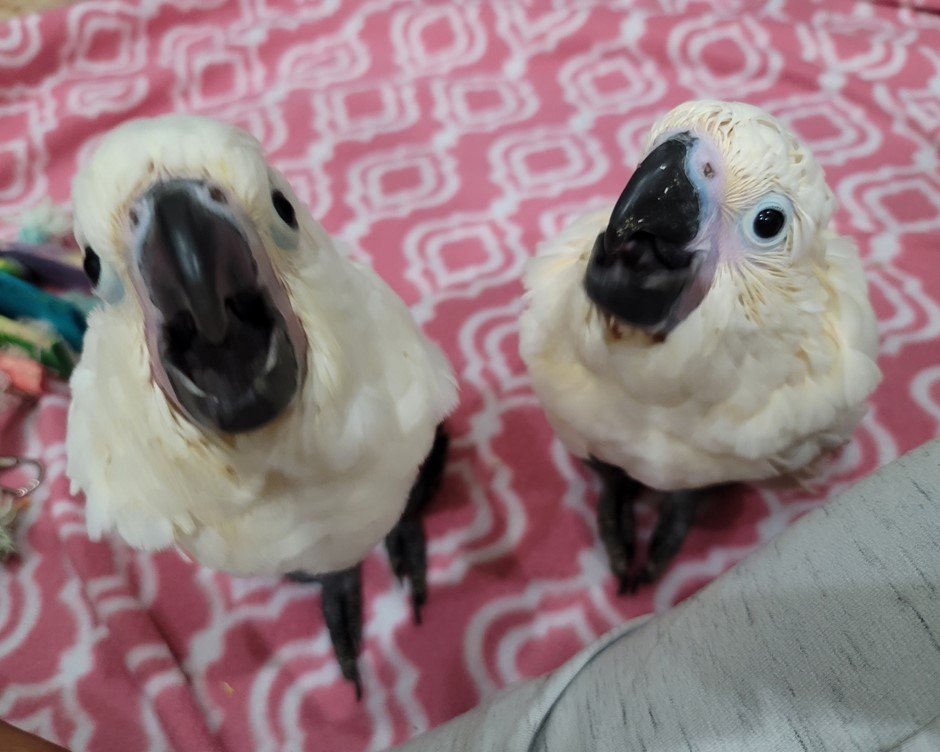
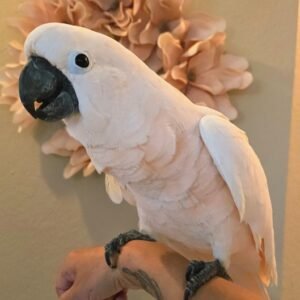
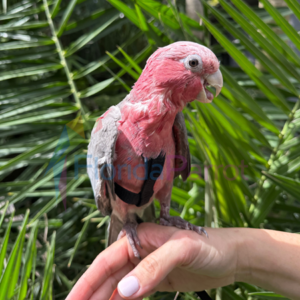
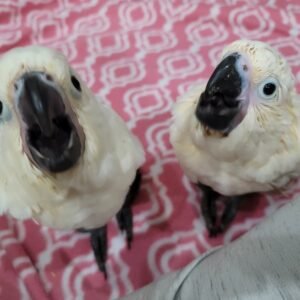
Umbrella Cockatoo Parrot (White Cockatoo)
All our Umbrella Cockatoo Parrot are lovingly handfed, well socialized (around other pets also) and fully weaned before going to their new home. He will be DNA sexed and fully disease tested. He will be weaned to a pellet (mix of Tops, Psittacus, and Zupreme) veggie and fruit diet.
Training Tips for Beginners
Umbrella Cockatoos are extremely smart but emotionally sensitive.
1. Start Early Socialization
- Expose them to different people and safe environments.
- Prevents excessive attachment to one person.
2. Use Positive Reinforcement
- Reward with small treats (almond slivers, sunflower seeds).
- Never punish — they can develop fear or aggression.
3. Teach Basic Commands
- “Step up”
- “Step down”
- Target training with a stick
- Recall training (coming when called)
4. Keep Sessions Short
- 5–10 minutes, 1–3 times daily.
- End on a positive note.
5. Manage Screaming
- Ignore attention-seeking screams.
- Reward quiet behavior.
They can develop behavioral issues if bored or neglected.
Care Requirements & Daily Needs
Umbrella Cockatoo Parrot are high-maintenance birds.
Daily Time Commitment
- 3–4 hours of interaction outside the cage
- Mental stimulation (toys, training, foraging)
Grooming Needs
- Weekly misting or shower
- Regular nail trims
- Occasional wing trims (if desired)
Mental Stimulation
- Rotate toys weekly
- Provide destructible wooden toys
- Puzzle feeders
Without stimulation, they may develop:
- Feather plucking
- Screaming
- Depression-like behavior
Legal Requirements to Own One
Legal requirements vary by country and state:
United States
- Legal in most states
- Some cities require permits
- Check local zoning laws
- Must comply with federal wildlife regulations
International
- May require CITES paperwork
- Some countries restrict exotic bird ownership
Always verify with:
- Local wildlife agency
- Department of Agriculture
- City animal control
Average Lifespan & Health Issues
Lifespan
- 40–60 years (some live longer in excellent care)
Common Health Issues
- Psittacine beak and feather disease (PBFD)
- Obesity
- Fatty liver disease
- Feather plucking (behavioral)
- Respiratory infections
Annual avian vet checkups are essential.
Recommended Diet & Feeding Schedule
Ideal Diet Breakdown
- 60–70% high-quality pellets
- 20–25% fresh vegetables
- 5–10% fruit
- Small amount of seeds/nuts as treats
Best Vegetables
- Kale
- Carrots
- Bell peppers
- Broccoli
- Sweet potato
Feeding Schedule
- Morning: Fresh veggies + pellets
- Evening: Pellets
- Training treats during sessions
Avoid:
- Avocado
- Chocolate
- Caffeine
- Alcohol
- Salty foods
Fresh water daily.
Best Cage Size & Setup
Minimum Cage Size
- 36″ x 24″ x 48″ (bigger is always better)
- Bar spacing: 1–1.5 inches
Ideal Setup
- Multiple perches (natural wood)
- Stainless steel bowls
- Foraging toys
- Swings and ladders
- Play stand outside cage
Location:
- Bright area
- Not directly in kitchen
- Away from drafts
- Part of family activity space
10 FAQs About Buying an Umbrella Cockatoo
1. How much do they cost?
$1,000–$3,000 depending on breeder and age.
2. Are they good for beginners?
Generally not ideal for first-time bird owners due to emotional needs.
3. Do they talk?
Yes — moderate talking ability, excellent mimics.
4. Are they loud?
Very. Daily screaming is normal.
5. Can they live alone?
They need heavy daily interaction if kept solo.
6. Do they bond to one person?
Often yes — can become possessive.
7. Are they aggressive?
Can be during puberty or hormonal seasons.
8. Are they messy?
Extremely — expect dust and food throwing.
9. Should I adopt instead of buy?
Adoption is strongly encouraged — many are rehomed due to behavioral challenges.
10. Are they suitable for apartment living?
Usually not due to noise level.
Final Thoughts
Umbrella Cockatoos are:
✔ Extremely loving
✔ Highly intelligent
✔ Very demanding
✔ Long-term commitment (possibly lifelong)
They thrive in homes where someone is present most of the day.
Reviews
There are no reviews yet.