White fronted Amazon Babies: A Real-World Guide for New Owners
Are you looking for White fronted Amazon babies, chances are you’re thinking about bringing one home. That’s exciting — and it’s a big commitment.
These small but bold parrots are known for their expressive personalities, strong talking ability, and long lifespans. They’re slightly smaller than many other Amazon parrots, but don’t let their size fool you. They’re smart, energetic, and need daily interaction to thrive.
What Is a White Fronted Amazon?
- Scientific name: Amazona albifrons
- Average size: 9–11 inches
- Weight: 180–250 grams
- Lifespan: 40–60 years
- Noise level: Moderate (with loud moments)
- Talking ability: Very good
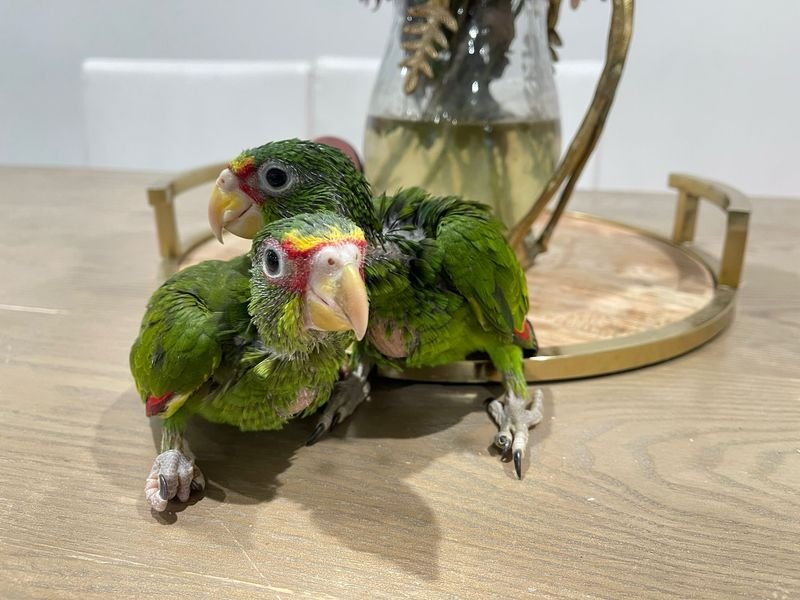
They’re sometimes called “Spectacled Amazons” because of the white patch on their forehead. Compared to larger Amazons, they tend to be a bit more manageable in size — but they still have the classic Amazon confidence.
Training Tips for White Fronted Amazon Babies (Beginner Friendly)
The earlier you start training, the better. Baby parrots are like toddlers — curious, sensitive, and constantly learning.
1. Focus on Trust First
Before teaching tricks, build a bond.
- Sit near the cage and talk calmly.
- Offer treats from your hand.
- Move slowly and avoid sudden gestures.
Trust makes everything easier later.
2. Teach “Step Up” Immediately
This is the most important command.
Use a gentle, steady hand and reward every success.
Keep sessions short — 5 to 10 minutes is perfect.
3. Use Positive Reinforcement Only
White-fronted Amazons respond extremely well to:
- Small fruit pieces
- A favorite pellet
- Verbal praise
Avoid punishment or yelling. It damages trust and can cause biting.
4. Socialize Every Day
Expose your baby to:
- Different people
- Normal household sounds
- Safe environments outside the cage
Well-socialized babies grow into confident adults.
Daily Care Requirements
Owning a White-fronted Amazon isn’t difficult — but it does require consistency.
Out-of-Cage Time
Plan for 2–4 hours daily outside the cage. They need movement and interaction.
Mental Stimulation
Rotate toys weekly. Offer:
- Foraging toys
- Shreddable materials
- Puzzle feeders
Bored Amazons can scream or pluck feathers.
Sleep
They need 10–12 hours of uninterrupted sleep every night.
A dark, quiet area works best.
Cleaning Routine
- Fresh water daily
- Remove uneaten fresh food after 3–4 hours
- Spot clean cage tray daily
- Deep clean weekly
Good hygiene prevents respiratory and bacterial problems.
Legal Requirements for Owning a White Fronted Amazon babies
Before buying, check your local laws.
In the United States
They’re legal in most states. However:
- Some cities restrict exotic birds.
- Health certificates may be required for interstate transport.
In the UK and Europe
You may need:
- Proof of captive breeding
- CITES documentation
Always buy from a reputable breeder who provides paperwork. Avoid wild-caught birds.
Lifespan and Health Issues
How Long Do White-Fronted Amazons Live?
With proper care, they live 40 to 60 years. This is a lifetime commitment.
Common Health Issues
- Obesity (very common in Amazons)
- Vitamin A deficiency
- Fatty liver disease
- Feather plucking (stress related)
- Respiratory infections
- Psittacosis
Annual avian vet visits are strongly recommended — even if your bird looks healthy.
Recommended Diet for White-Fronted Amazon Babies
Diet plays a huge role in longevity and behavior.
Ideal Daily Diet
- 60–70% high-quality pellets
- 20–30% fresh vegetables
- 5–10% fruit
- Seeds only as occasional treats
Best Vegetables
- Carrots
- Kale
- Bell peppers
- Sweet potatoes
- Broccoli
Fruits (In Moderation)
- Apples (no seeds)
- Berries
- Mango
- Papaya
Foods to Never Feed
- Avocado
- Chocolate
- Caffeine
- Alcohol
- Onions and garlic
Feeding Schedule Example
Morning:
Fresh vegetable mix + pellets
Evening:
Pellets + small training treat
Remove fresh food after a few hours to prevent spoilage.
Best Cage Size and Setup
Even though they’re smaller Amazons, space matters.
Minimum Cage Size
At least 24″ x 24″ x 36″
Bigger is always better.
Bar Spacing
Between 5/8″ and 3/4″
Must-Have Cage Items
- Natural wood perches (different diameters)
- Rope perch
- Stainless steel food bowls
- Foraging toys
- Shreddable toys
- Separate play stand (if possible)
Place the cage in a social area — but away from kitchens, drafts, and direct sunlight.
10 Frequently Asked Questions About Buying White Fronted Amazon Babies
1. How much do they cost?
Typically $800–$2,000 depending on breeder and location.
2. Are they good for first-time bird owners?
They can be — if you’re ready for daily interaction and long-term responsibility.
3. Are they loud?
Moderate. They have loud moments, especially mornings and evenings.
4. Do they talk well?
Yes. Many develop impressive vocabularies.
5. Are they cuddly?
Some are very affectionate. Others are more independent. Personality varies.
6. Do they go through a “bluffing” stage?
Yes. Adolescence can bring temporary attitude changes.
7. Should I buy a hand-fed baby?
Yes. Hand-fed babies are usually better socialized.
8. Can they live with other birds?
Sometimes — but always supervise.
9. What’s the biggest mistake new owners make?
Not providing enough mental stimulation.
10. Are they good apartment birds?
Maybe. They’re not the loudest Amazons, but they can still be noisy.
Final Thoughts: Is a White Fronted Amazon Babies Right for You?
White-fronted Amazon babies are funny, intelligent, and deeply interactive companions. But they’re not low-maintenance pets. They need time, structure, enrichment, and a proper diet.
If you’re ready for a parrot that could be part of your life for the next 40+ years, they can be incredibly rewarding companions.
If you’d like, I can next help you with:
- A breeder screening checklist
- A first-week home setup guide
- A comparison between White-fronted and other Amazon parrots
- A printable care sheet for new owners
Just let me know what would be most helpful.




Reviews
There are no reviews yet.